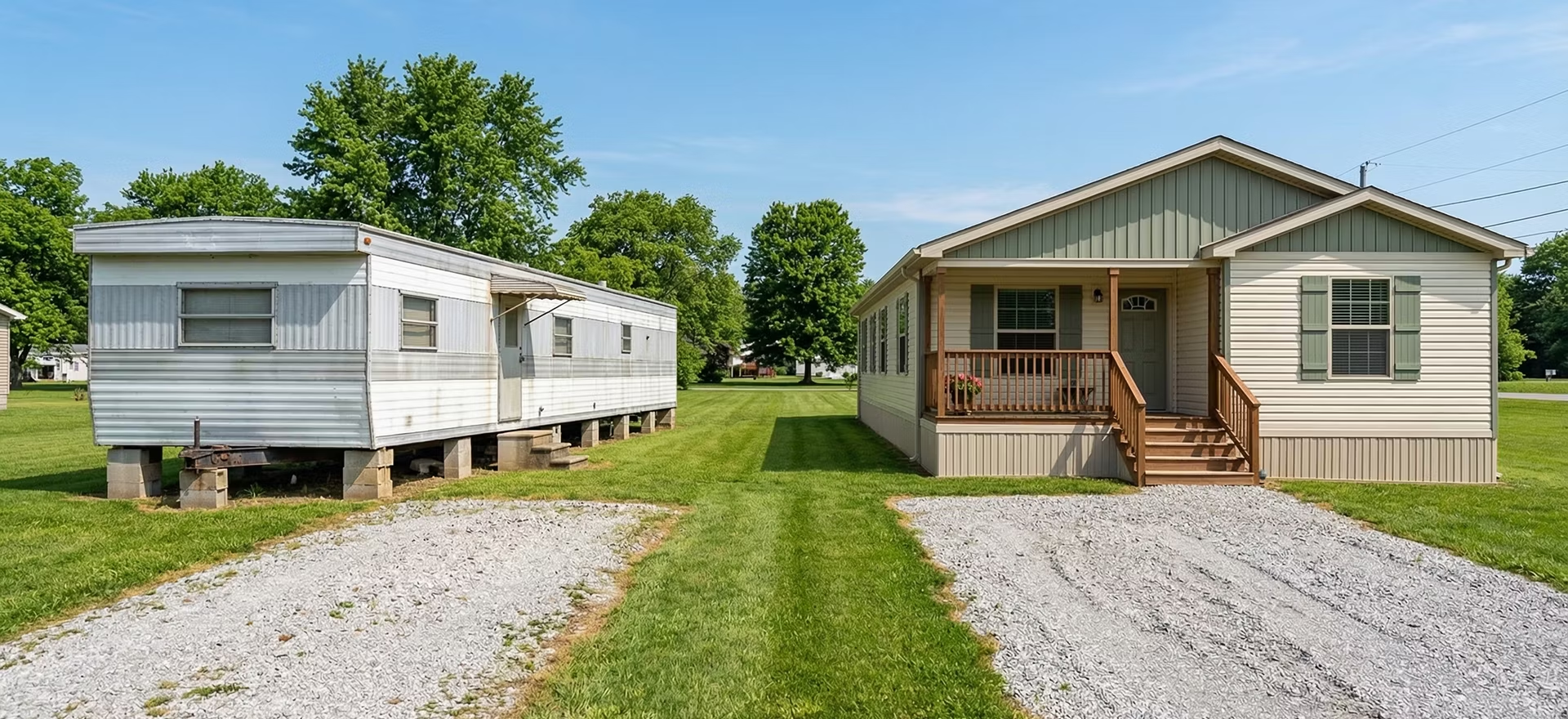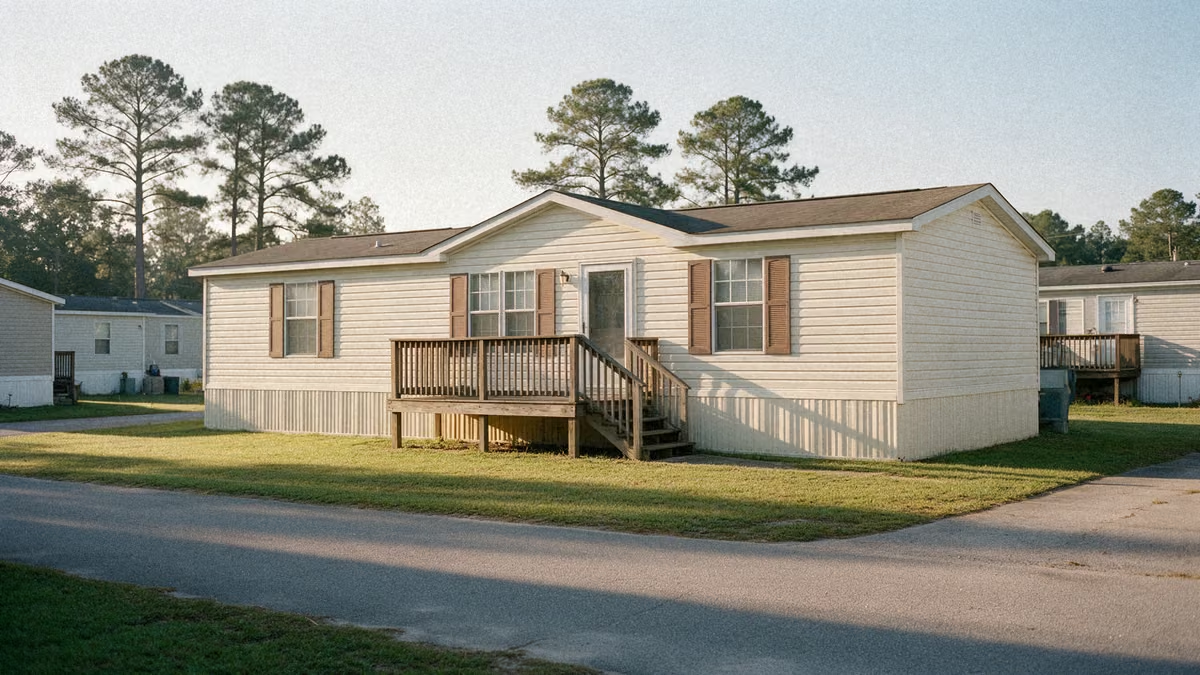
To sell a mobile home as is in Georgia, you and the buyer agree in writing that the buyer takes the home in its present condition and you won’t make repairs. That’s a term of the sale, not a shortcut around the rest of it. The title still has to transfer, liens and taxes still matter, and an as-is clause generally won’t protect a seller who hides a problem they know about.
This guide is for Georgia owners whose home needs work, from worn carpet to a leaking roof, soft floors, or storm damage. It explains what an as-is term covers and what you may still need to tell a buyer. It also helps you choose between repairing first, selling as-is on the open market, selling to a dealer or direct buyer, and keeping the home for now.
What it means to sell a mobile home as is
An as-is sale means the buyer accepts the home with its flaws. You don’t promise repairs, and you don’t vouch for its condition beyond what you put in writing. It’s a term you and the buyer agree to, usually in the purchase agreement and the bill of sale.
Georgia’s commercial code, which covers sales of goods, says wording like “as is” or “with all faults” generally excludes implied warranties. An implied warranty is a promise the law reads into a sale even when nobody says it out loud, such as a promise that an item works for its ordinary purpose. The same code section adds that a buyer who inspects before signing, or refuses to, gets no implied warranty for defects that inspection should have revealed.
Georgia courts read as-is clauses in home sales in a similar way. In a 2018 decision, the Georgia Court of Appeals repeated the rule that as-is terms relieve a seller only of warranty claims, not other kinds of claims.
What an as-is term doesn’t change:
- The title. It still has to transfer to the buyer, with any lien released. Georgia Mobile Home Titles: What Sellers Need to Know covers that side.
- Property taxes. Georgia’s tax commissioners can’t issue the yearly mobile home location permit until the taxes due on the home have cleared.
- The park. A park can still set its own rules for new buyers and for homes that stay.
- What you know. An as-is clause doesn’t give you cover to hide a defect.
What you may still have to tell a buyer
As-is limits what you promise. It doesn’t let you hide what you know.
Georgia’s rule on hidden defects
For used houses, Georgia courts still start from “caveat emptor,” Latin for “let the buyer beware.” There’s a key exception. When a seller knows a house has serious defects, and the buyer doesn’t know and couldn’t find them with due diligence, staying silent can count as fraud. Georgia’s code also says that suppressing a material fact you’re obliged to share is fraud, and that duty can come from the circumstances of a sale. In a 1985 case, the Court of Appeals found that an as-is clause didn’t block that kind of claim.
Disclosure protects sellers too. In a 2012 case, the sellers had listed past basement leaks on a disclosure statement and told the buyers about them. When the buyers later sued for concealment, the Court of Appeals ruled for the sellers on that claim.
Most of those decisions involved houses sold with land. A mobile home sold on its own title can raise different questions, so the details of your sale matter.
Agents and homes built before 1978
Two more rules can apply:
- Real estate agents. If you list with an agent, Georgia’s brokerage law requires the agent to disclose adverse material facts about the property’s physical condition. That covers facts the agent actually knows that a buyer couldn’t find through a reasonably diligent inspection. Ask your agent how this applies to a home sold without land.
- Homes built before 1978. The federal lead-based paint rule covers most housing built before 1978, and EPA and HUD guidance says that includes mobile homes. Before the buyer commits, the seller has to disclose any known lead-based paint or hazards, hand over any reports, and give the buyer an EPA-approved pamphlet, among other steps. The buyer also gets 10 days to test for lead, unless both sides agree in writing on a different period or the buyer waives it in writing.
The practical answer: tell the buyer in writing about problems you know of, especially ones they couldn’t easily spot. If you know of a serious hidden problem, a Georgia attorney can tell you what your sale requires.
What decides whether an as-is sale makes sense?
- The kind of problem. Worn flooring and dated fixtures turn away fewer buyers than a roof leak, soft floors, wiring trouble, or storm damage. Problems that affect safety or structure shrink the pool of buyers the most.
- Whether a buyer could get a loan. Fannie Mae’s rules, for example, make a conventional loan on an existing manufactured home ineligible while the home has defects or needed repairs that affect safety, soundness, or structural integrity. When lenders say no, the home depends on cash buyers, and that usually means fewer offers. How Age, Size, Condition, and Location Affect Mobile Home Value in Georgia explains how condition feeds into price.
- The home’s age. Homes built before June 15, 1976 predate the federal HUD standards, which limits financing and, in some places, where the home can go.
- Where the home sits. A park may have rules about the condition of homes that stay after a sale. A home on your own land, or one that has to move, sells differently again.
- Time and money. Repairs take cash and weeks. Selling as-is trades some price for a sale you don’t have to fix first.
Repairing first, then selling
Repairs pay off when they cost less than they add to the price, or when they turn a cash-only home into one a buyer can finance. A small roof leak caught early or one soft spot in a floor can fall in that group. A home that needs a new roof, a new subfloor, and new wiring often doesn’t.
Before you spend money:
- Get two or three written estimates for the main problem.
- Ask what similar homes sell for, both fixed up and as they stand. A real estate agent who sells mobile homes can pull recent sales. What Is My Mobile Home Worth in Georgia? explains how to build a value range from more than one source.
- Add carrying costs. Lot rent, taxes, insurance, and loan payments continue while the work goes on.
- Compare what you would keep each way, not just the sale price.
Keep receipts and photos of any work you do. They show a buyer what you fixed and when.
Selling as-is to a private buyer or through an agent
You can sell a mobile home as is on the open market, on your own or with a listing agent. Price it for its condition, not for what a repaired home would bring. Buyers will discount for the work they see, and many will need to pay cash.
Put the terms in writing. The purchase agreement and the bill of sale should state that the buyer takes the home as is, list the problems you’ve disclosed, and give the price, the closing date, and who pays which costs.
Let the buyer inspect. An inspection protects both sides: the buyer sees what they’re getting, and you have a record that they looked. Georgia courts have also said that a buyer who knowingly takes a run-down home as-is should inspect it with extra care.
Some Georgia real estate contracts give the buyer a set period to inspect and back out, then treat the buyer as accepting the property as is once that period ends. Read that timeline closely before you sign.
Selling as-is to a dealer or direct buyer
A manufactured home retailer, a retail broker, or a direct buyer may consider a home the open market would struggle with: one that needs major work, has to move, or can’t get financing. Georgia’s Office of Insurance and Safety Fire Commissioner licenses manufactured home retailers, retail brokers, and installers. You can search its list of licensed companies before you sign anything.
When a buyer says it buys homes as-is, treat that as a starting point and read the written terms. Check:
- Whether the price can change after an inspection or walkthrough.
- Who pays closing costs, back taxes, lot rent, and any moving costs.
- What happens if the buyer finds a problem you didn’t know about.
- The closing date, and what has to happen before it.
A direct offer may come in below what a repaired home would list for. That doesn’t make it a bad deal. Cash Offer vs. Listing Price: What You Would Actually Keep in Georgia shows how to compare the two on what you’d keep.
Common condition problems in an as-is sale
Roof leaks and water damage
A leak rarely stays in the roof. Water can reach ceilings, walls, insulation, and the floor below. Buyers will want to know how long it leaked and whether anyone fixed the source, so keep photos and any repair receipts.
Soft floors and subfloor damage
Soft spots usually point to moisture in the subfloor, often near a bathroom, a kitchen, or a door. Buyers will ask about the cause as well as the floor. A contractor or home inspector can tell you how far the damage goes.
Fire, storm, or tree damage
Safety comes first. If the damage involves the roof, the frame, or the wiring, keep people out until a qualified person checks it. If you have an open insurance claim, ask your insurer how a sale affects the claim and any payment before you sign anything. If a lender holds a lien on the home, ask the lender too. If a county or city code office has posted a notice on the home, call that office before you sell.
Homes built before June 1976
The federal HUD standards for manufactured homes took effect June 15, 1976, and every section of a home built after that date has to carry a HUD label. Lender standards like Fannie Mae’s call for homes built to those standards, so a buyer of an older home often has to pay cash.
Moving an older home can be harder too. Georgia law lets counties and cities run inspection programs for pre-owned manufactured homes that move, and it bars health and safety conditions based on a home’s age. Even so, some local rules treat pre-1976 homes differently. Murray County’s posted permit procedures, for example, say no mobile home built before June 15, 1976 may move into or within the county. Ask the planning or zoning office where the home would go.
Separate guides on each of these problems, and on whether to repair a mobile home or sell it as-is, are in progress.
What to gather before an as-is sale
- The title for each section, in your name, and a payoff statement from any lienholder.
- Your latest county tax bill or receipt.
- The data plate and HUD label numbers, if the home has them.
- A written list of the problems you know about, with photos.
- Repair estimates, receipts, and inspection reports.
- Insurance claim records for any storm, fire, or water damage.
- Any lead-based paint records, for a home built before 1978.
- The park lease and written rules on resales, if the home sits in a park.
- A deed, or a filed Certificate of Permanent Location (Form T-234), if the home sits on land you own.
Common mistakes in an as-is sale
- Treating as-is as permission to stay quiet about a known problem.
- Leaving the as-is terms out of the written agreement and the bill of sale.
- Pricing the home as if the repairs were done.
- Paying for a big repair without checking whether it pays back.
- Signing an offer without reading whether the price can change after an inspection.
- Forgetting that the title, any lien, and the property taxes still need attention.
How to choose your next step
- The problem is small and buyers could finance the home once it’s fixed. Repairing first may bring a higher price.
- The repairs are large, or the home predates the 1976 standards. It may be more practical to sell a mobile home as is, to a private cash buyer, a dealer, or a direct buyer.
- The home has to move. Count moving and setup costs, and check the rules where it would go.
- You know of a serious hidden problem. Put it in writing, and ask a Georgia attorney what your sale requires.
- You don’t need to sell now. Keeping the home and fixing it over time may cost less than selling it below what it’s worth to you.
None of these is right for every owner. Guides on your selling options, moving a manufactured home in Georgia, and selling in a complicated situation such as an estate or an occupied home are also in progress.
When to contact an office or professional
- County tag office: what the title record shows, including liens.
- County tax commissioner: taxes owed and the yearly location permit.
- County or city planning or zoning office: rules for moving or placing a home, especially an older one.
- Insurance company: how a sale affects an open claim.
- Contractor or home inspector: how far damage goes and what a fix would cost.
- Park manager: resale rules and any condition standards for homes that stay.
- Real estate agent: what similar homes sell for, repaired and as they stand.
- Georgia attorney: what you must disclose, how to word an as-is clause, or a dispute with a buyer.
If you have a quick question about how we work, our FAQ page covers common ones. You can also contact us.
If a direct sale might fit your home
If you’d like to see how a direct sale would compare with repairing or listing, send us the details on your home and we’ll review the situation with you. A review isn’t an offer, and there’s no cost to ask. You can also read how the process works first.
Sources Reviewed
- Official Code of Georgia: O.C.G.A. § 11-2-316, exclusion or modification of warranties
- Official Code of Georgia: O.C.G.A. § 23-2-53, suppression of a material fact
- Official Code of Georgia: O.C.G.A. § 10-6A-5, duties of a broker engaged by a seller
- Official Code of Georgia: O.C.G.A. § 8-2-171, pre-owned manufactured homes
- Official Code of Georgia: O.C.G.A. § 48-5-492, mobile home location permits
- Court of Appeals of Georgia: Georgian Fine Properties, LLC v. Lang (October 17, 2018)
- Court of Appeals of Georgia: Reininger v. O’Neill (June 28, 2012)
- U.S. Environmental Protection Agency: 40 C.F.R. Part 745, Subpart F, lead-based paint disclosure
- EPA and HUD: Interpretive Guidance on Lead-Based Paint Disclosure, Part II (December 5, 1996)
- Georgia Office of Insurance and Safety Fire Commissioner: Manufactured Housing
- Fannie Mae: Selling Guide B2-3-02, Special Property Eligibility: Factory-Built Housing
- Murray County: Procedures for Acquiring a Manufactured Home Location Permit (one county’s posted procedures, cited as an example)
Last reviewed: November 3, 2026
This article gives general information about selling a mobile home in its present condition in Georgia. It isn’t legal advice. Disclosure duties, local placement rules, and contract terms depend on your documents and facts, so confirm your situation with a Georgia attorney, your county offices, or the park.