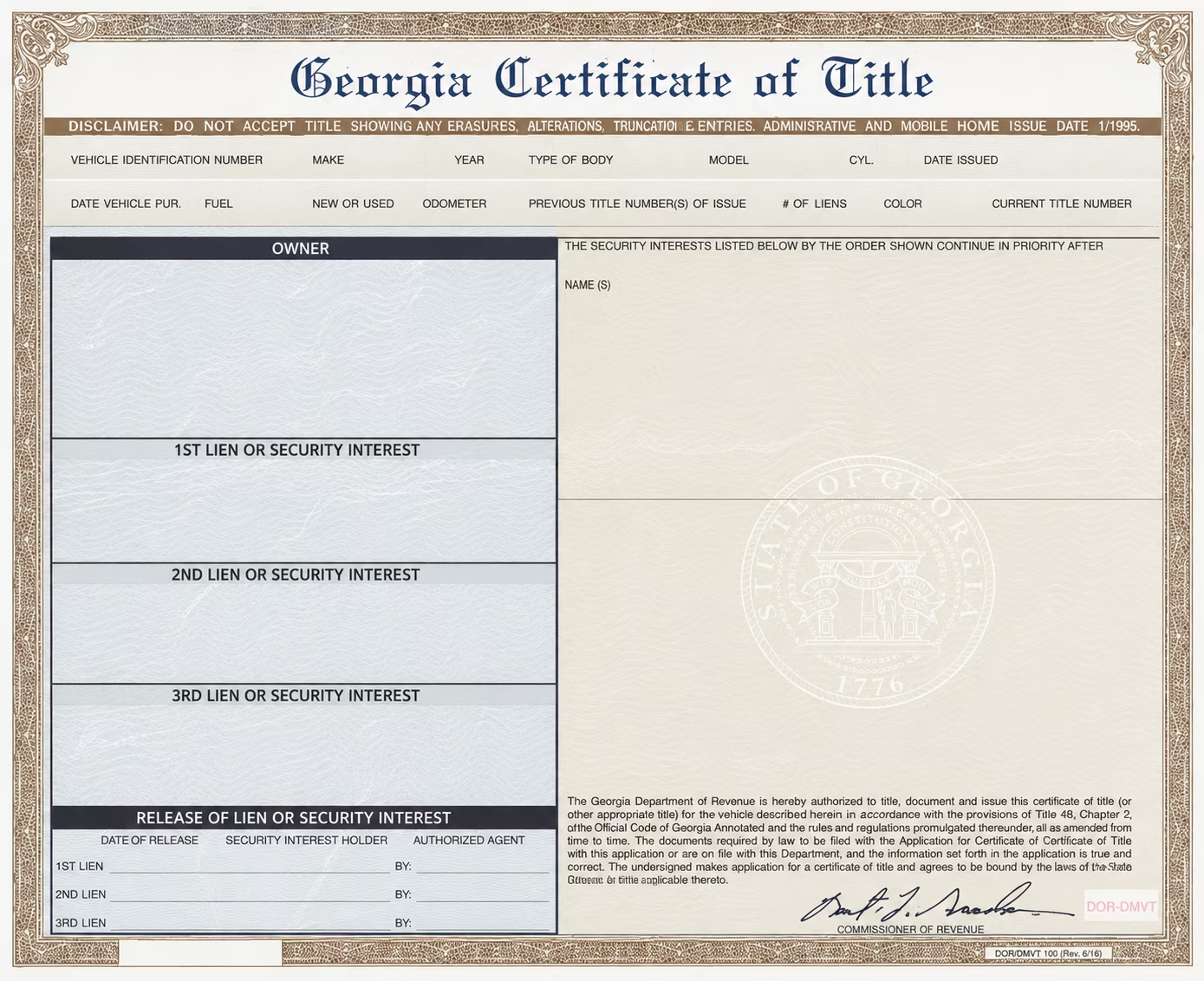
In Georgia, a manufactured home can stop being personal property with its own title and become part of the land it sits on. That change happens through a Certificate of Permanent Location, filed with the county, and the Department of Revenue’s Form T-234 is the version used for a home that already has a Georgia title. Once it’s filed, the title is cancelled, and the home is generally handled as part of the real estate instead.
That shift matters if you’re selling, because a home classified as real property doesn’t transfer the way a titled mobile home does. This article covers what the T-234 does and how to find out whether it was ever filed on your home. For the wider title picture, see Georgia Mobile Home Titles: What Sellers Need to Know.
What changes the answer?
- Was a T-234 or T-234A ever filed on this home? If one was, the title may already be cancelled, and the home may already be treated as real property in county records.
- Does the home have a Georgia title today? The T-234 instructions state that a valid Georgia certificate of title is required before a home can be declared real property.
- Does anyone with an ownership interest in the home also own the land? Georgia law ties real-property status to a home that is or will be permanently affixed to land in which a home owner also has an ownership interest.
- Is there a lien on the home? Under the form’s instructions, every lienholder or secured party has to sign too.
- When was the home sold? The related T-234A applies to a home that was never issued a title and was sold on or after July 1, 2006. It is a different form for a different situation, and the two aren’t interchangeable.
How the T-234 process works
Based on the Department of Revenue’s form and the state statute, the process generally runs like this:
- The owners and lienholders complete the form. All owners of the home sign and date it. Every lienholder or secured party signs and dates it too. The form also lists the legal description of the land, including the deed book, page, and county, and the names of the landowners.
- The Clerk of Superior Court files it. The certificate goes into the county’s real estate records, in the county where the home sits.
- The county tag office receives a certified copy. Along with the original certificate of title and the filing fee, the tag office sends the form and the title to the Department of Revenue’s Motor Vehicle Division for cancellation. The form lists an $18 filing fee.
- The tax assessor’s office gets a stamped copy. The home is then valued for property tax purposes as part of the real estate.
After that, according to the form, no further title records are updated as long as the home stays classified as real property. Counties can run the steps in a slightly different order, so ask your county tag office how they handle it.
What to gather or check
- Any copy of a filed T-234 or T-234A, if you have one
- The current certificate of title, if the home still has one
- The deed to the land and its recorded deed book and page
- Lienholder names and any lien release paperwork
- A search of the real estate records at your county Clerk of Superior Court for a Certificate of Permanent Location
Important exceptions
A filed certificate changes what you can sell. Georgia’s statute says that once a Certificate of Permanent Location is properly filed, the home becomes, for legal purposes, part of the real property it sits on. In practice that generally means the home and the land are tied together, and a sale is usually handled as a real estate transaction rather than a title transfer at the tag office. That is a general principle, not advice about your closing, so a Georgia real estate attorney should confirm how it applies to your property.
Removing the home isn’t a simple decision. Georgia law makes it unlawful to remove a home from land it has been permanently attached to without the written consent of the landowner and the holders of all security interests. If you were planning to sell the home and move it, check this first.
Reversing the classification isn’t covered by the sources reviewed here. The Department of Revenue pages and the statute describe how a home becomes real property, but this article did not find a published process for turning it back into titled personal property, so it doesn’t guess at one. If you think the filing was a mistake, or the home is no longer permanently placed, talk with your county tag office and a Georgia real estate attorney.
A lender may be involved. If a loan on the home was recorded before the filing, the lender signed off on the certificate. Mortgage and lien questions on real property are different from the title-lien process covered in How Liens Affect a Georgia Mobile Home Sale.
Multi-section homes have an extra layer. The form asks for the home’s identification details, so a mismatch between the paperwork and the home can cause problems. Double-Wide Titles, A/B Sides, and Serial Numbers in Georgia explains how those numbers should line up.
Common mistakes or delays
- Assuming a home is still “titled” because that’s how it was bought, when a T-234 was filed years ago by a prior owner.
- Looking for a title at the tag office when the home was reclassified and the title was cancelled.
- Treating the T-234 and T-234A as the same form.
- Listing the home for sale without checking whether the land and the home are owned by the same people.
- Forgetting that a lienholder’s signature was required on the original filing.
Your realistic options
If you confirm a certificate was filed and the home sits on land you own, selling the home and land together as real estate is often the cleanest route. If the land belongs to someone else, you’ll need to understand who owns what before any sale. If you can’t tell what was filed, start with the county records and the tag office rather than guessing, and consider keeping the home while you sort it out. Whether the home can be sold apart from its land is a separate question, and a guide on selling a mobile home without the land in Georgia is in progress.
When to contact an office or professional
Your county tag office can tell you whether the title was cancelled and what they have on file. The Clerk of Superior Court can confirm whether a Certificate of Permanent Location is recorded against the land. Your county tax assessor’s office can tell you how the home is classified for tax purposes. Because real-property classification affects ownership and transfer, a Georgia real estate attorney is the right person to confirm how a sale should be structured. If you’d rather talk through your situation first, you can also contact us.
If you want a direct-sale review
If you’re still sorting out what was filed on the home, it may help to know what a direct sale could look like once you do. Send the details on the home and the land, and we’ll review the situation with you. A review isn’t an offer, and there’s no cost to ask.
Sources Reviewed
- Georgia Department of Revenue: T-234 Mobile/Manufactured Home Certificate of Permanent Location
- Georgia Department of Revenue: T-234A Certificate of Location for a Manufactured Home (Title Not Required)
- Official Code of Georgia: O.C.G.A. § 8-2-183.1 (when a manufactured home becomes real property)
This article provides general information, not legal advice. Whether a home is real or personal property, and how it can be sold, depends on the recorded documents and facts. Confirm your situation with your county tag office, Clerk of Superior Court, or a qualified Georgia real estate attorney before you rely on it.