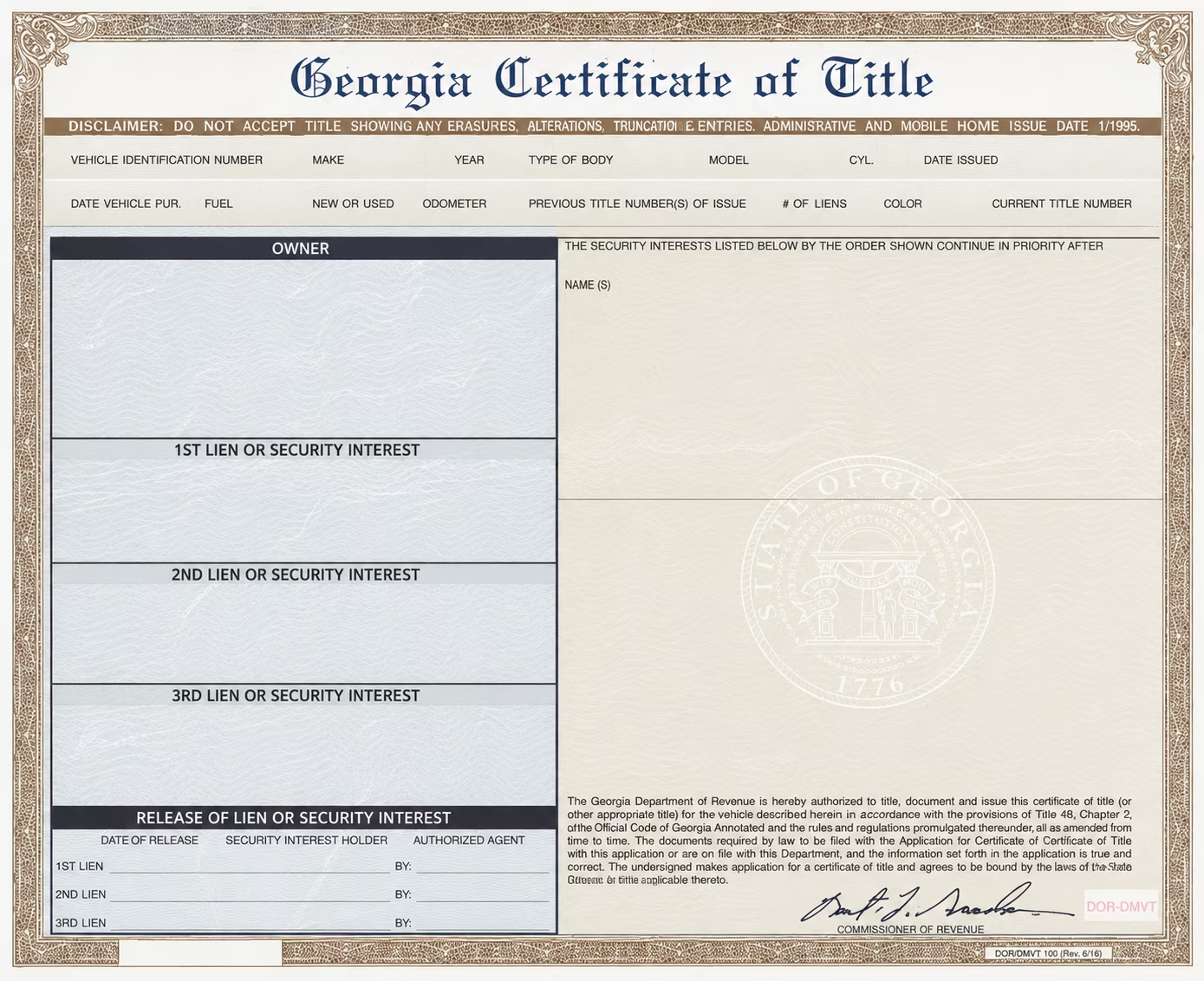
When a mobile home’s titled owner has died, Georgia won’t simply reissue the title in the heir’s name. You have to title the home in your own name first, through one of two paths: a full probate path using Letters of Testamentary or a Year’s Support order, or a simpler path using an affidavit of inheritance. Which path applies depends on how the estate was handled, not on how the home itself is titled.
This is one piece of the broader title picture — for liens, lost titles, and real-property classification, Georgia Mobile Home Titles: What Sellers Need to Know covers the full range. Here, the focus is specifically on getting the title into the heir’s name after a death.
What changes the answer?
- Did the estate go through full probate?
- That produces Letters of Testamentary, which is one accepted path.
- Did the estate qualify for Georgia’s simplified process instead?
- That uses a sworn affidavit rather than a full probate filing.
- Is there only one heir, with no will to administer?
- A specific short-form document can stand in for the affidavit.
- Is there a lien on the original title?
- A lien has to be released as part of this filing too, regardless of which path applies.
Filing the title transfer
- Confirm which path fits your estate. If the estate went through full probate, you’ll use Letters of Testamentary or a Year’s Support order. If it qualified for Georgia’s simplified process for smaller estates, you’ll use an affidavit instead. Your county probate court can confirm which applies to your situation.
- Gather the estate document. A certified copy of the Letters of Testamentary or Year’s Support order (full-probate path), or a completed and signed Form T-20 Affidavit of Inheritance plus a copy of any non-probated will (simplified path).
- Get a certified death certificate. Both paths require one.
- Resolve any lien on the original title. If a lien is recorded, you’ll also need a signed Form T-4 lien release before the title can transfer clean.
- Complete Form MV-1, along with the original title in the deceased owner’s name and the transfer document completed by the executor or heir, as applicable.
- File everything at your county tag office and pay the $18 title fee.
What to gather or check
- Certified Letters of Testamentary or Year’s Support order, or a completed T-20 affidavit
- A certified death certificate
- The original title, with any lien addressed
- A copy of the will, if one exists and the estate didn’t go through full probate
- Documentation of your relationship to the deceased owner, in case a family-transfer tax exemption applies
Important exceptions
A single heir with no will to administer may not need the T-20 affidavit at all. Georgia allows a legible copy of a “No Administration Necessary” document to substitute for the affidavit in that specific situation. Confirm with your county probate court whether your estate qualifies before you complete the longer form.
Filing with the T-20 affidavit doesn’t let you skip straight to a buyer. If you use the affidavit path, the title has to go into your name first before you can sell or transfer the home to someone else — you can’t have a buyer’s name added directly from the deceased owner’s title.
A lien doesn’t disappear because the owner died. If the original title shows an active lien, that has to be released the same way it would in any other transfer — How to Replace a Lost Mobile Home Title in Georgia touches on the mobile-home-specific lien rules, and a separate guide on how liens affect a Georgia mobile home sale covers the release process in more depth.
A close family relationship may reduce or exempt the transfer tax. An affidavit (Form MV-16) may apply if you’re a qualifying family member, which can affect the Title Ad Valorem Tax owed on the transfer. Confirm eligibility with your county tag office rather than assuming it applies.
Common mistakes or delays
- Trying to sell the home directly from the deceased owner’s title instead of completing the inheritance filing first.
- Assuming a lien from years ago no longer matters because the titled owner has died.
- Starting the T-20 affidavit process without checking whether the “No Administration Necessary” shortcut applies instead.
- Waiting to start the estate paperwork until a buyer is ready to close, when it can take real time either way.
Your realistic options
If the estate paperwork is already handled — probate is complete, or the affidavit path clearly applies — this is usually a matter of filing at the tag office before you move forward with a sale. If the estate situation itself is still unresolved, that generally has to happen before a clean title transfer of any kind, regardless of who eventually buys the home. If you’re still weighing whether to keep, rent, move, or sell the home at all rather than just fix the title, a broader guide on the options for an inherited Georgia mobile home covers that decision separately from the paperwork itself.
When to contact an office or professional
Your county probate court can tell you whether your estate needs full probate or qualifies for the simplified process, and can issue the certified documents you’ll need either way. Your county tag office can confirm exactly what they’ll accept for your specific filing, including any lien or tax-exemption questions. A probate attorney can help if the estate is disputed, if there’s no clear will, or if multiple heirs disagree about next steps. If you’d rather talk through your specific situation with a person, you can also contact us directly.
If you want a direct-sale review
Once the title is in your name, or once you have a clear sense of how long that’s going to take, it can help to know what a direct sale would look like. Send the details on the home and we’ll review the situation with you — a review isn’t an offer, and there’s no cost to ask.
Sources (Georgia Department of Revenue)
- Georgia Department of Revenue — Vehicle Inherited or Purchased from an Estate
- Georgia Department of Revenue — T-20 Affidavit of Inheritance
- Georgia Department of Revenue — MV-1 Motor Vehicle Title/Tag Application
- Georgia Department of Revenue — County Tag Offices
This article provides general information, not legal advice. Probate, estate, and title requirements depend on the specific documents and facts of the estate — confirm your situation with your county probate court, your county tag office, or a qualified Georgia attorney before you rely on it.