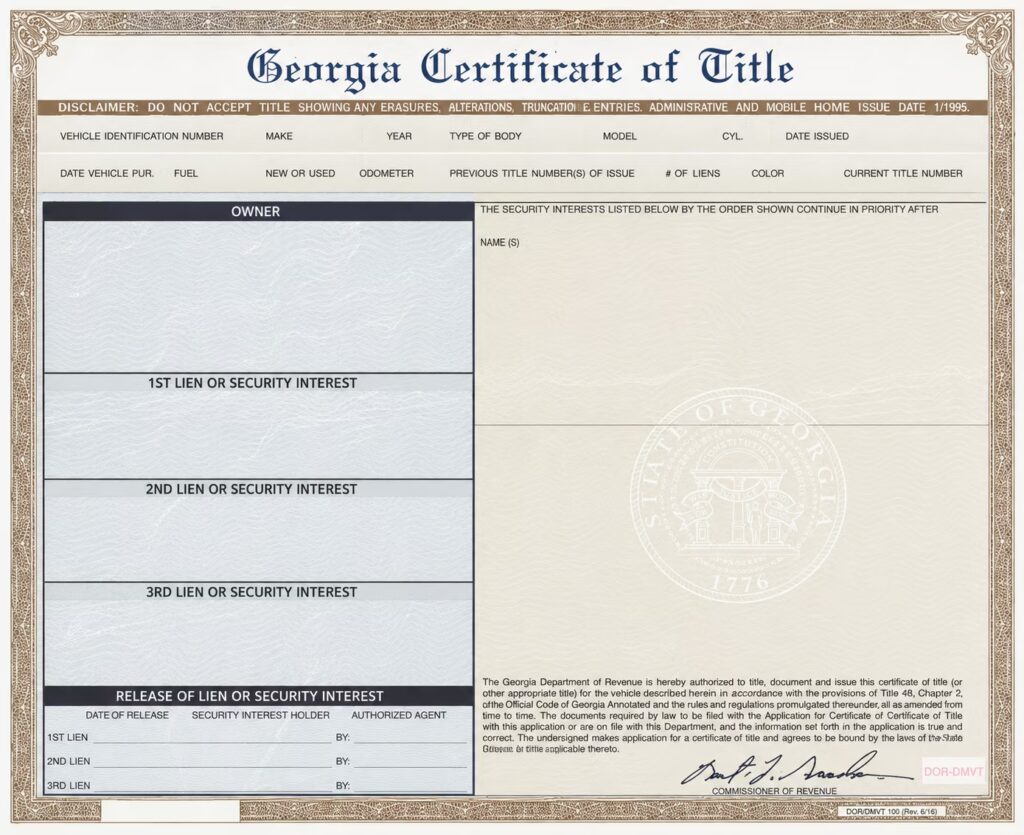
A lost mobile home title usually is not a permanent problem. In most cases you file a replacement application at your county tag office, pay an $8 fee, and receive a new title in your name. The process changes if a lien is still recorded, if the titled owner has died, or if the home has more than one certificate.
This is one piece of the broader title picture. If you also need to understand liens, inherited ownership, or how real-property classification works, Georgia Mobile Home Titles: What Sellers Need to Know covers all of it together.
What changes the answer?
A handful of facts determine how straightforward your replacement filing will be:
- Is there a lien on the title record? A lien has to be accounted for before a clean replacement issues, and mobile homes follow a different rule than standard vehicles here.
- Is the titled owner still living? Georgia will not reissue a replacement title in a deceased person’s name.
- Is this a double-wide or triple-wide? If the manufacturer issued a separate certificate for each section, you may need a separate replacement filing for each one.
- Do you actually have a vehicle title at all? If a previous owner filed a T-234 Certificate of Permanent Location, the vehicle title was already canceled, and there is nothing left to replace — the home now transfers with the land by deed.
Filing a replacement title
- Confirm what you still have. A partial or damaged title (sometimes called a mutilated title) helps but is not required if the document is genuinely gone.
- Confirm the title situation is otherwise clean. If a lien is recorded or the owner has died, resolve that first — see the exceptions below.
- Complete Form MV-1. This is the same form Georgia uses for a new title, a transfer, or a replacement.
- Gather supporting documents. Bring identification, and legal documentation of a name change if your name doesn’t match the original title.
- File at your county tag office and pay the $8 replacement fee. The application is filed in person; check with your specific office about accepted payment methods.
What to gather or check
- Any remaining piece of the old title, even if damaged
- The manufacturer’s certificate of origin, if you still have it — it can help confirm the home’s identity during the filing
- Lien-release paperwork, if a lien was ever recorded
- Estate documents, if the titled owner has died
- Proof of a legal name change, if applicable
Important exceptions
An active lien changes the process, and the usual vehicle rule doesn’t apply. On standard Georgia vehicle titles, a lien more than ten years old is generally treated as satisfied without a separate release. That exception does not extend to mobile homes. Per the Department of Revenue’s lien release page, a lien release is required on a mobile home title regardless of the lien’s age. If your title shows a lien you believe is old and settled, don’t assume it’s automatically clear — a separate guide on how liens affect a Georgia mobile home sale walks through confirming and releasing one.
A deceased titled owner changes the process entirely. Georgia will not issue a replacement title in a deceased person’s name, even if you’re the rightful heir. You’ll need to go through the inheritance title process first, which depends on whether the estate went through full probate, qualified for Georgia’s simplified process, or has a single heir with no will to administer. A separate guide on transferring the title of an inherited mobile home covers the filing steps, and if you’re still deciding what to do with the home itself, another guide on the broader options for an inherited mobile home covers that decision too.
A multi-section home may need more than one filing. If your double-wide or triple-wide has separate certificates for each section, check whether both are actually lost or just one. Filing a replacement for one section doesn’t resolve the other.
Common mistakes or delays
- Assuming a lien recorded more than ten years ago has automatically expired. For mobile homes, it hasn’t.
- Applying for a replacement title in a deceased owner’s name instead of completing the inheritance filing first.
- Overlooking that a double-wide has two certificates, and only replacing one.
- Waiting until a buyer is ready to close before starting a replacement filing that can take real time.
Your realistic options
If the lost title is the only issue, this is usually a paperwork step rather than a reason to change your sale plans — you can still sell directly, list the home, or keep it once the replacement title is in hand. If the lost-title process surfaces a lien or an estate issue you didn’t fully account for, that paperwork generally needs to move forward regardless of who eventually buys the home, and it can take longer than a straightforward replacement. In that situation it’s worth starting the resolution process before you commit to a closing date, whether or not you end up selling to a direct buyer.
When to contact an office or professional
Your county tag office can tell you exactly what’s on file for your title, including any recorded lien, and what documentation they’ll accept for a replacement in your specific case. If the titled owner has died, a probate attorney can advise on which estate documents apply before you file anything. Neither office can resolve a disputed ownership claim — that requires a Georgia court or an attorney.
If you want a direct-sale review
If sorting out a lost title is going to take a little time, it can help to know what a direct sale would look like once it’s resolved. Send the details on the home and we’ll review the situation with you — a review isn’t an offer, and there’s no cost to ask.
Related Articles
Sources (Georgia Department of Revenue)
- Replace Lost or Stolen Title
- Mobile Home Title
- MV-1 Motor Vehicle Title/Tag Application
- How to Release a Lien and Security Interest on Title
- County Tag Offices
- Vehicle Inherited or Purchased from an Estate
This article provides general information, not legal advice. Lien, estate, and title-record requirements depend on the specific documents in your case — confirm your situation with your county tag office or a qualified Georgia attorney before you rely on it.